Sham Shui Po – Lai Chi Kok Road ca.1924
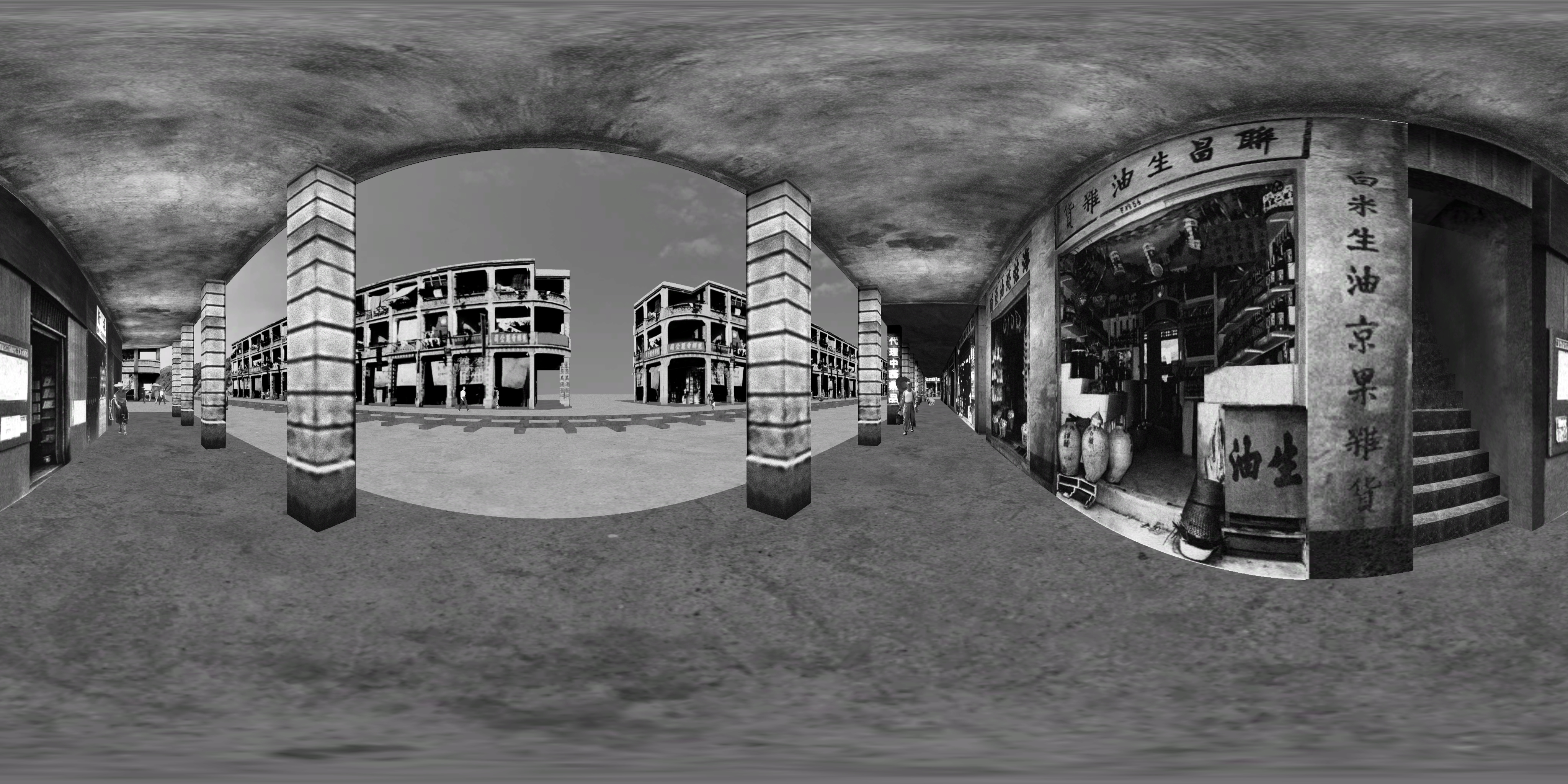
360-degree panoramic artwork developed from historical photos
Historical Hotspots:
Lai Chi Kok Road Temporary Railway
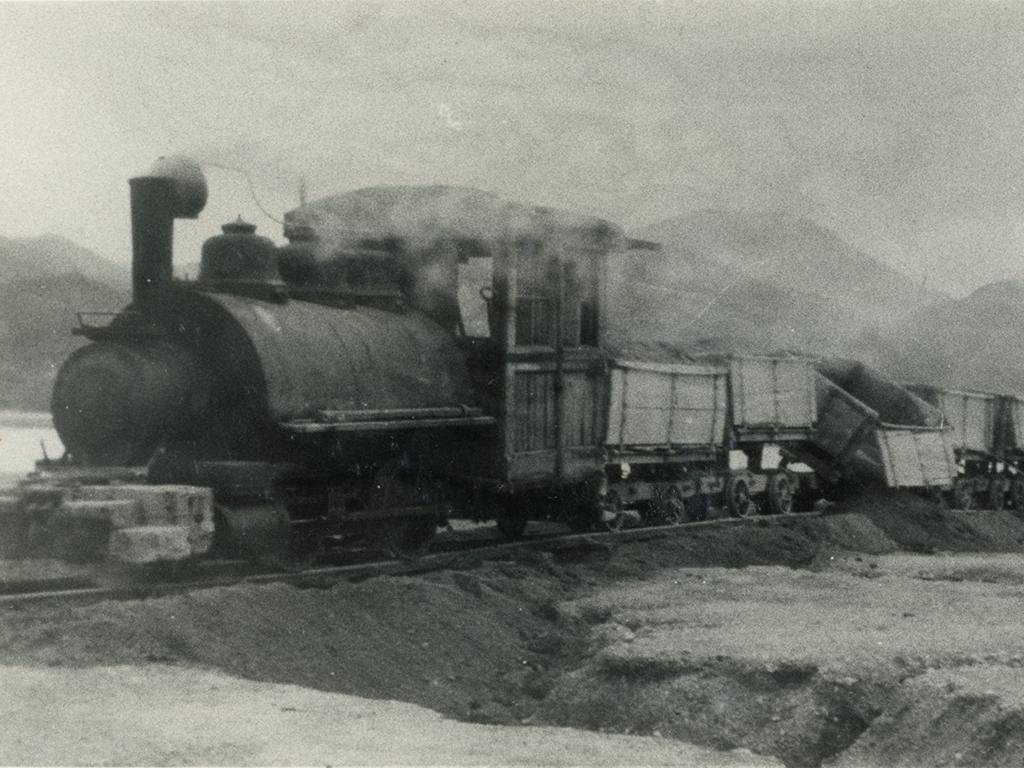
From 1919 to 1921, the earth filling deposited in land reclamation at Sham Shui Po was obtained from the cutting of the foothills at Lai Chi Kok and the hills around Tai Po Road. However, the rocks in the area were unworkable due to their excessive hardness and the government instead mined the filling from the hills in Mong Kok and Tai Kok Tsui. From 1922 to 1924, the contractor laid railway lines along Lai Chi Kok Road with Decauville locomotives and side tipping wagons, transporting the solid rocks from Tai Kok Tsui to Sham Shui Po for reclamation works. This was the origin of the temporary railway in Lai Chi Kok.
As the supply of electricity had been established in Hong Kong since 1890, an ever-increasing volume of machinery was leveraged in reclamation works. Since 1917, the government introduced equipment including Decauville locomotives, railway tracks, and side tipping wagons to transport the materials of earth filling. This mode of transport was also applied in reclamation sites at Wan Chai and Sham Shui Po.
For reference only, the photo shows the same model of railway
Photo courtesy of Public Records Office, Government Records Service
Lai Chi Kok Road
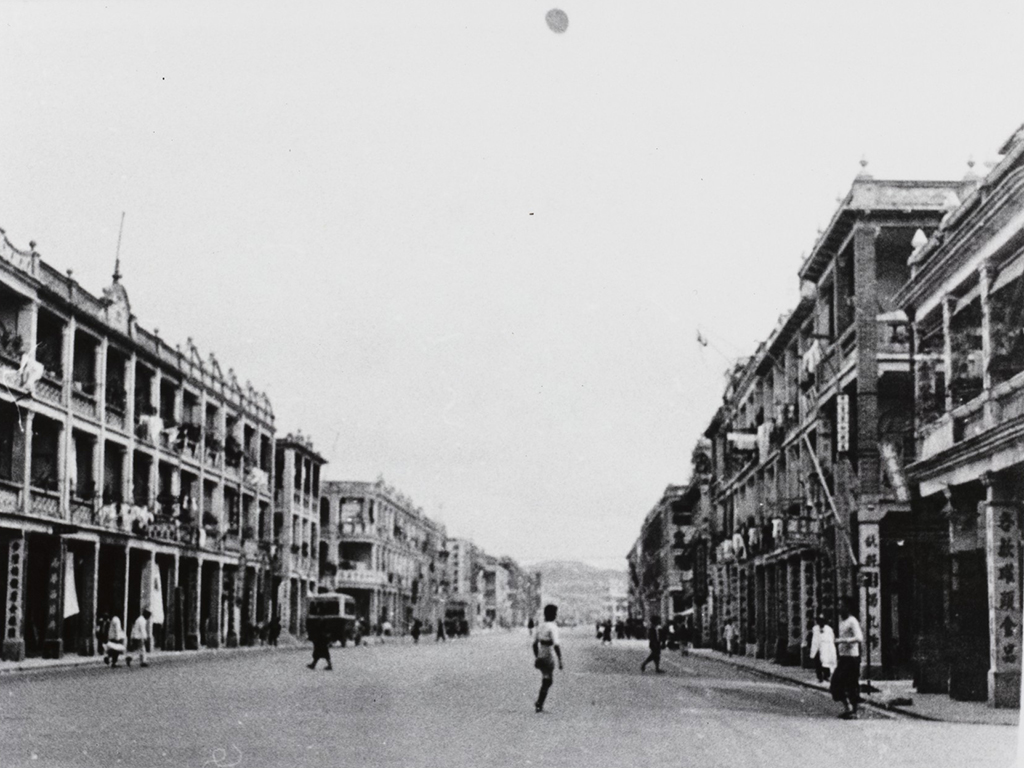
To expand the land for housing and boost the economy in Hong Kong, reclamation works were launched at Sham Shui Po from 1912 to 1926. The project was initially a privately funded operation, but the government actively participated in it from 1919. The filling materials were solid rocks used to pave Tai Po Road and the hills of Mong Kok. After the completion of the first phase of the reclamation project, the main roads such as Lai Chi Kok Road and Cheung Sha Wan Road were constructed. In its early days, Lai Chi Kok Road spanned from Nathan Road to Yen Chow Street, and extended to Sham Shui Po Barracks on Tonkin Street, which was closed in 1977. The barracks were then redeveloped into Lai Kok Estate and Sham Shui Po Park. Since then, Lai Chi Kok Road further stretched through Lai Chi Kok.
Back at the end of the 1920s, a small film house called “Ming Sing Theatre” was opened for business near the junction of Lai Chi Kok Road and Shek Kip Mei Street. The theatre seated 870 individuals and it was literally nicknamed “boat theatre” within the industry. Due to its limited number of audience members, Ming Sing Theatre partnered with some other cinemas to host viewings of movies, akin to a drifting boat in the waters. Despite its tiny-scale business, it provided a wealth of entertainment to residents in the community. The theatre ultimately terminated its operations in the 1970s and was reconstructed into the Lai Luen Building.
Photo courtesy of Public Records Office, Government Records Service
Animation:

As a highly populated city with a shortage of land, Hong Kong began the reclamation works in the 1850s. To transport the filling materials to the shore for reclamation in a more efficient way, the government of Hong Kong has imported locomotives, railway tracks, and side tipping wagons from overseas since 1917. This mode of transport was applied in the reclamation project at Sham Shui Po in the 1920s.