Sham Shui Po – Lui Seng Chun ca.1950
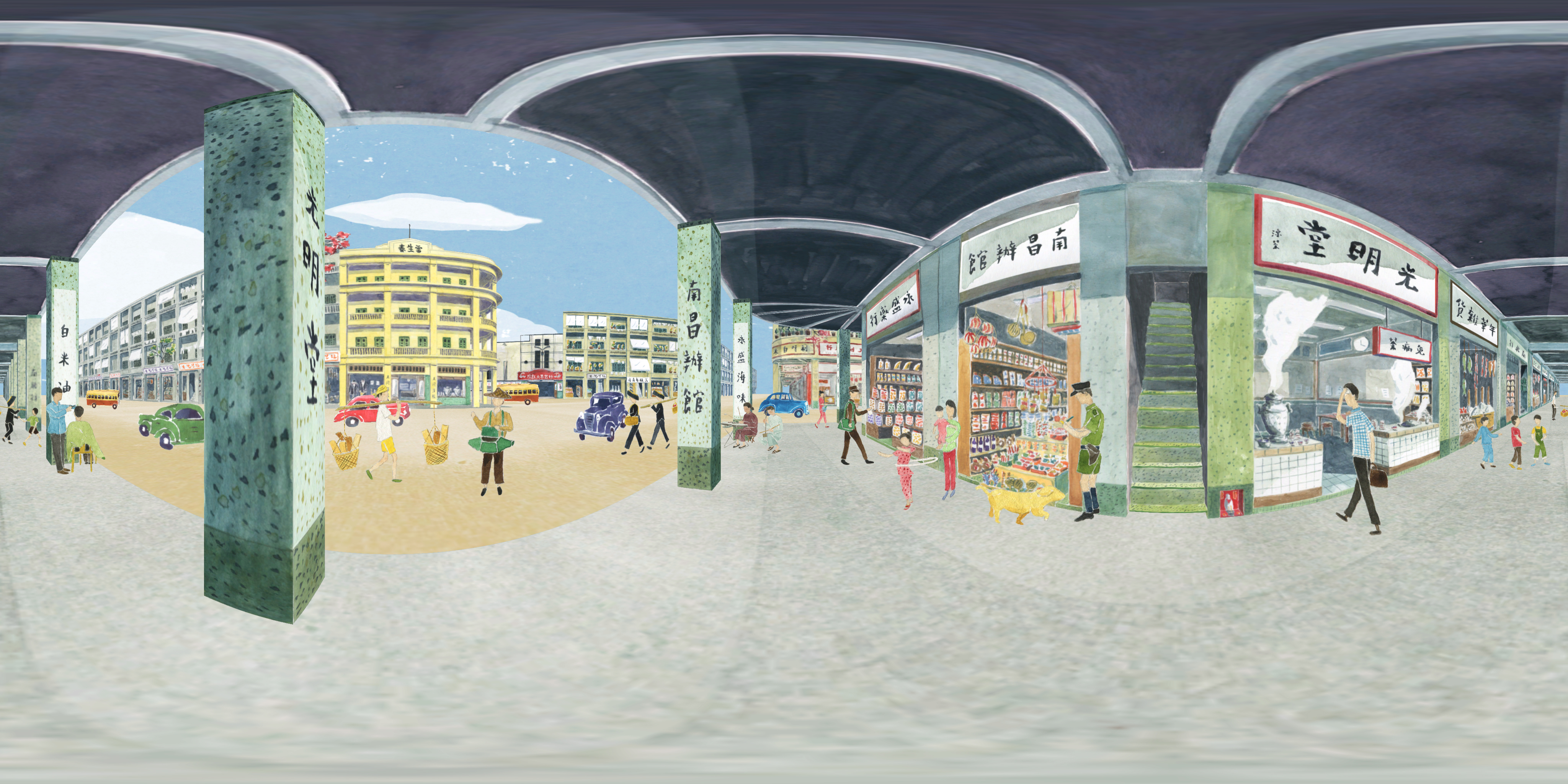
360-degree panoramic artwork created by Kinchoi Lam
Historical Hotspots:
Lui Seng Chun
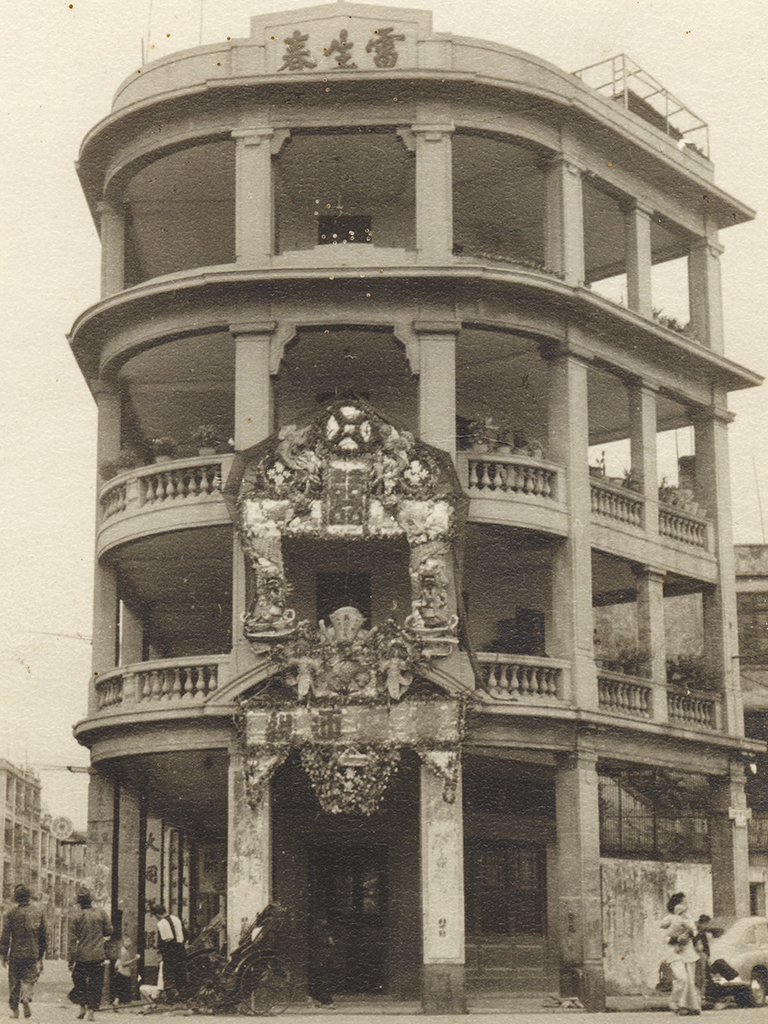
Despite the diminishing number of traditional shophouses, Lui Seng Chun is one of the remaining ones. In 1929, Mr. Lui Leung purchased a piece of land from the government. He recruited an architect, Mr. W.H. Bourne, to design a shophouse complex at the site and Lui Seng Chun was completed in 1931. As a typical four-storey Tong Lau (a kind of southern Chinese tenement building), a Chinese bone-setting medicine store named “Lui Seng Chun” was situated on the ground floor. Ascending to the upper floors were the living quarters for the members of Lui’s family. When reaching the top floor, one would notice the parapet wall installed with a stone plaque displaying the name of Lui’s family business. To fit into its location at the sharp angle constricted by the road intersection, the front elevation of the building was constructed in a curved shape. Fused with the elements of both Chinese and Western architectures, Lui Seng Chun showcased the feature of traditional “Bamboo Barrel Houses” of Lingnan in China, and was lavishly blended with the art deco style, classical pillars, and balusters of the West. Lui Seng Chun has shown the architectural characteristics of prewar Tong Lau buildings in Hong Kong.
During the Japanese occupation of Hong Kong in World War II, Lui Seng Chun medicine store had its business operation halted. After the war, the redevelopment took place in the neighbourhood. Swaths of people lived in the building, creating an overcrowded household environment. Lui Leung’s family gradually moved out due to the limited living space. In the 1970s, the building became a temporary residence for Lui’s relatives who came to Hong Kong from their hometown in Mainland China. In 2000, Lui Seng Chun was designated as a Grade I historic building by the Antiquities and Monuments Office. In the same year, Lui’s family decided to donate the building to the government. With revitalisation work, it was transformed into Hong Kong Baptist University School of Chinese Medicine – Lui Seng Chun.
Photo courtesy of Hong Kong Baptist University School of Chinese Medicine – Lui Seng Chun (Lui Seng Chun)
Good World Theatre
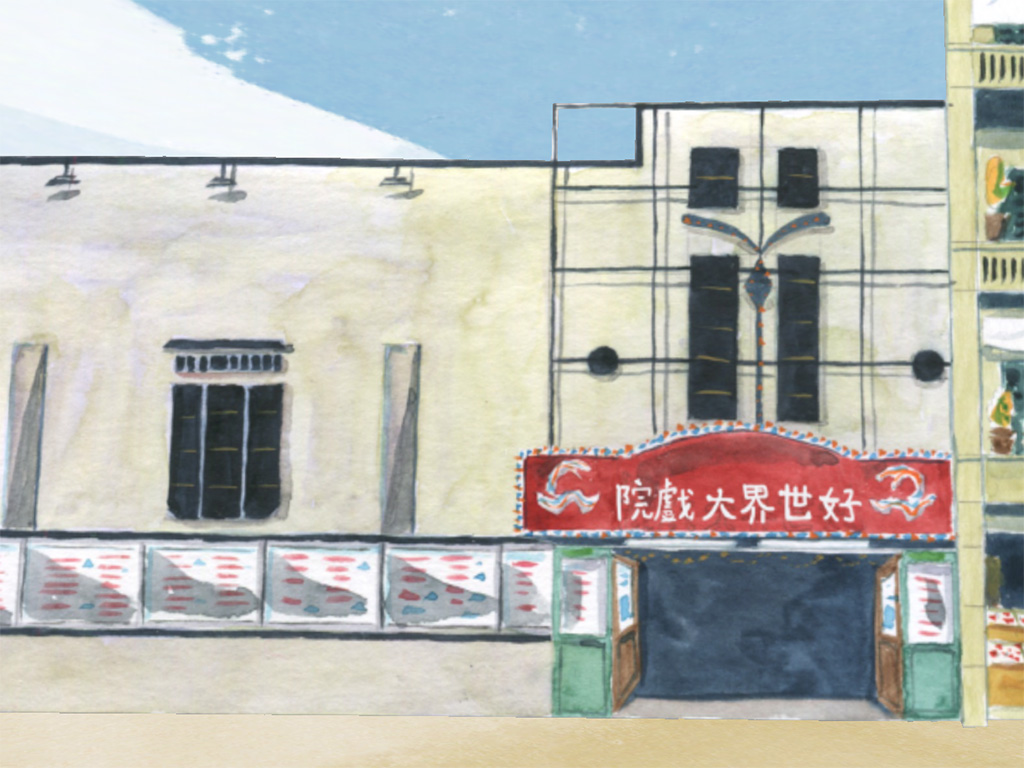
Founded in the 1940s, Good World Theatre was owned by an entrepreneur, Mr. Cheung Kon Fong, who ran a cinema circuit called “Nau Tai Circuit”. He also owned both New York Theatre and Great World Theatre, which were established in the 1950s. Good World Theatre terminated its business in 1972 and was converted into a residential premise, “Good World Building”. It remains standing till now.
Soon after the opening of Good World Theatre, Hong Kong fell under the Japanese occupation. The theatre resumed its business and showed Japanese documentaries around ten days after the occupation. Following the end of World War II, Cantonese film production burgeoned. “Nau Tai Circuit” therefore screened more Cantonese movies. The best-known of these releases was “The Legend of Purple Hairpin”, starring the renowned Cantonese Opera actresses Ms. Yam Kim Fai and Ms. Pak Suet Sin in 1959.
Animation:

In Hong Kong’s early days, it was common to house more than 10 families in a single tenement due to the limited living space of dwellings. To air-dry their washed clothes, people hung bamboo poles called “laundry bamboo” on the verandahs and rooftops of these buildings. Street vendors were often seen shouldering the long bamboo poles while walking and yelling to the crowds, “Laundry bamboo! Laundry bamboos for sale!” along the road.