Tai Hang – Tai Hang Fire Dragon Heritage Centre ca.1953

360-degree panoramic artwork created by Florence Lee
Historical Hotspots:
Hong Kong Confucian Society Primary School
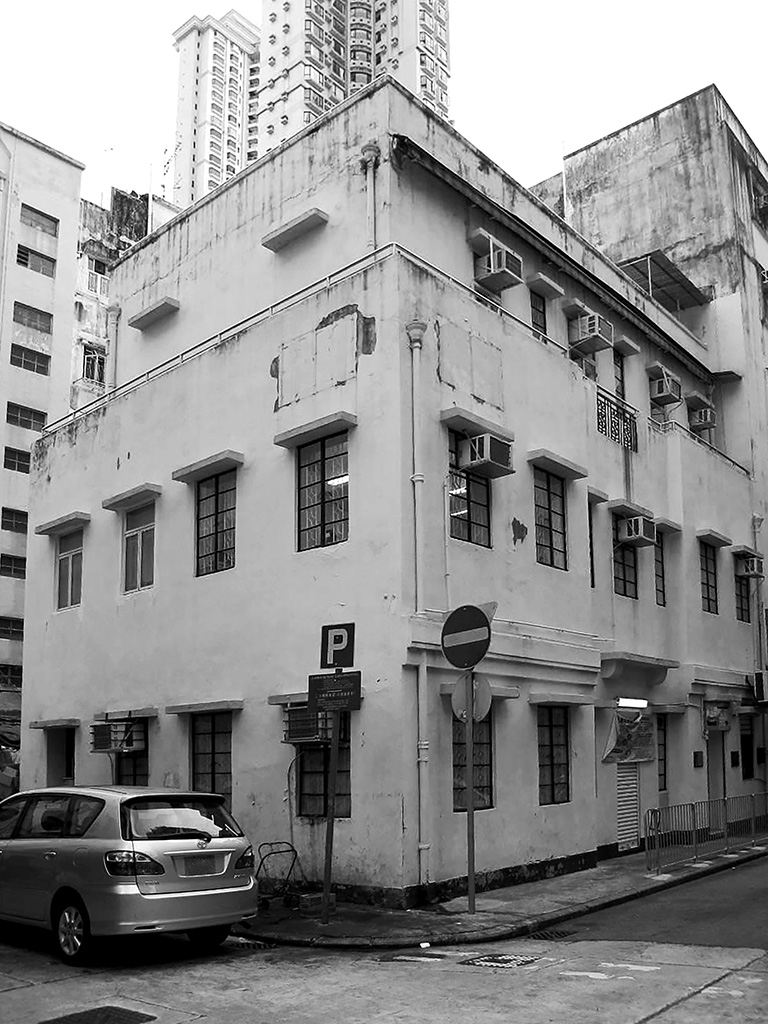
This was the former Hung Shing Yi Hok, meaning ‘Confucius free school for the poor’, founded in 1909 through donations from Tai Hang residents. In the same year, the school was renamed Tai Hang Hung Shing Yi Hok, and handed over to the Hong Kong Confucian Society, which took responsibility for operating it. Damaged during the Japanese Occupation, it was rebuilt after the war and renamed as Hong Kong Confucian Society Tai Hang Primary School.
In the early days, the students studied Chinese, letter writing and general studies. Only in the late 1950s was the curriculum expanded to include English, mathematics, history, hygiene and social studies. However, due to population growth, the school building was too small for all school-age children during the day, so the Tai Hang Residents’ Welfare Association borrowed the school venue and employed registered teachers to operate a free evening primary school with complimentary textbooks. The evening school was held every weekday from six to nine in the evening and was so popular that all the seats were taken.
The school building was subsequently converted to various uses and in 2010, the building was accorded as a Grade 3 Historical Building by the Antiquities Advisory Board. In 2013, sponsored by the government, it was revitalised as the Tai Hang Fire Dragon Heritage Centre to promote the culture of the Fire Dragon Dance.
Photo courtesy of Antiquities and Monuments Office
Streets in Tai Hang
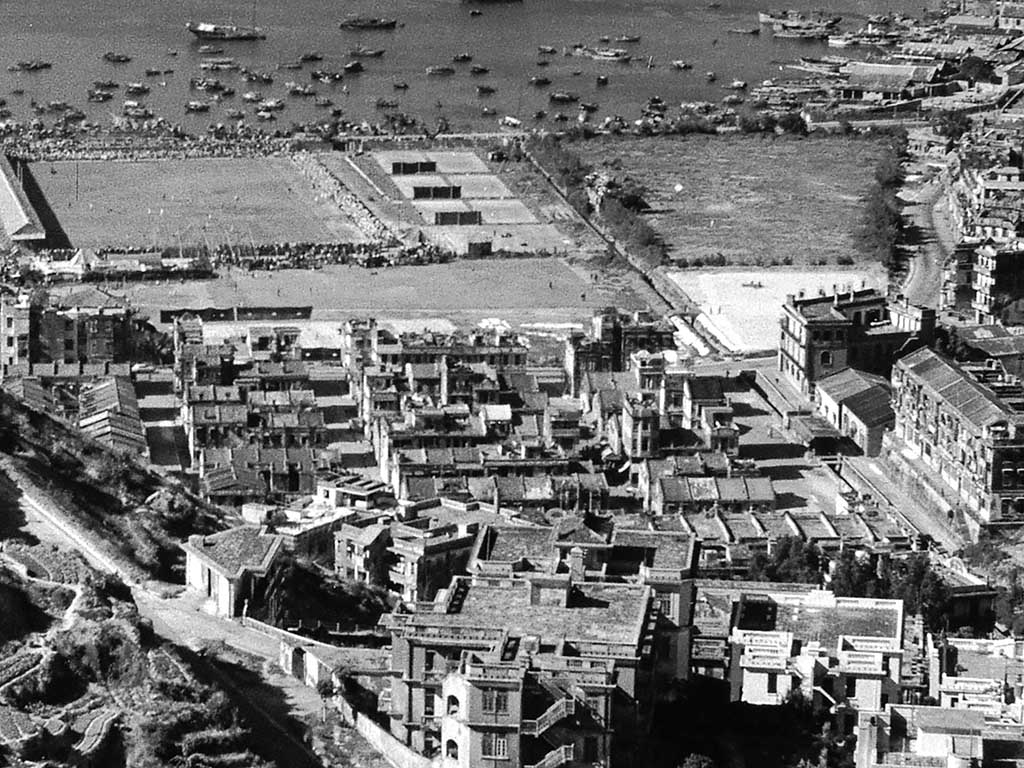
Many stories lie behind the names of the roads and streets of Tai Hang. As its name suggests, School Street refers to a place for learning, since Confucius Free School for the Poor was located there. The nearby streets, Shepherd Street, Brown Street, Ormsby Street, Warren Street and King Street, were all named after the surnames of government officials in the late 19th and early 20th centuries.
There used to be a bay with a shallow beach north of a road called Tung Lo Wan, which in Chinese means ‘bay of brass gong’, referring to the shape of the semi-circular bay. Further north, a causeway was built across the bay, so the area was called Causeway Bay. As the lowland around the bay was not convenient for transport, the government paved a road on the causeway for vehicles and trams and named it as Causeway Road.
Photo courtesy of Harvard-Yenching Library, Harvard University
Chinese stone houses
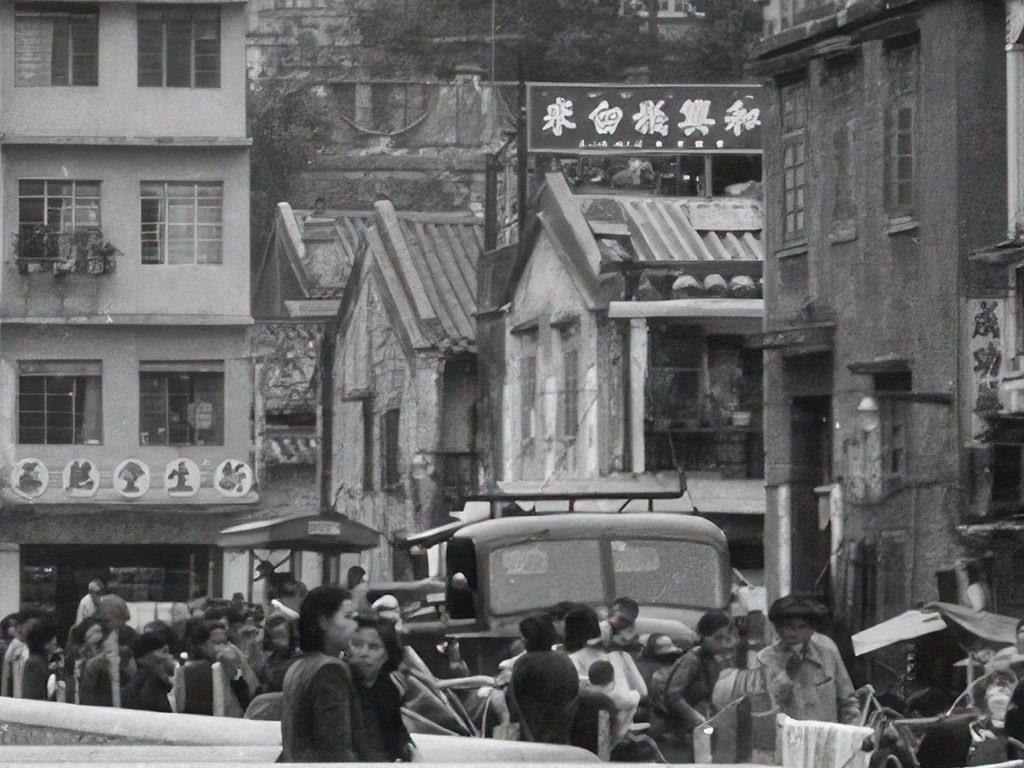
The predominant view of Tai Hang used to be the pitched and tiled rooftops of Chinese stone houses, before many of them were rebuilt into multi-storey residences. Most of the stone houses, unlike the single-storey houses still found on Sun Tsuen Street today, were made of granite and had two storeys, with pitched and tiled rooftops supported by gabled wooden beams. In the 1940s and 50s, each of these two-storey Chinese stone houses accommodated up to 20 people.
In the 1950s, the area nearby was primarily residential. According to local residents, while Tung Lo Wan Road and King Street were mostly residential area of well off people, Wun Sha Street was mainly a commercial area with shops. Tai Hang residents mostly worked in the same neighbourhood, running shops such as grocery stores, laundries, food stalls and Chinese medicine clinics, as well as working in factories such as glazing factories, plastics factories and breweries.
Photo courtesy of Survey and Mapping Office, Lands Department
Intangible Cultural Heritage:
360-degree panoramic video of Fire Dragon Dance
Animation:

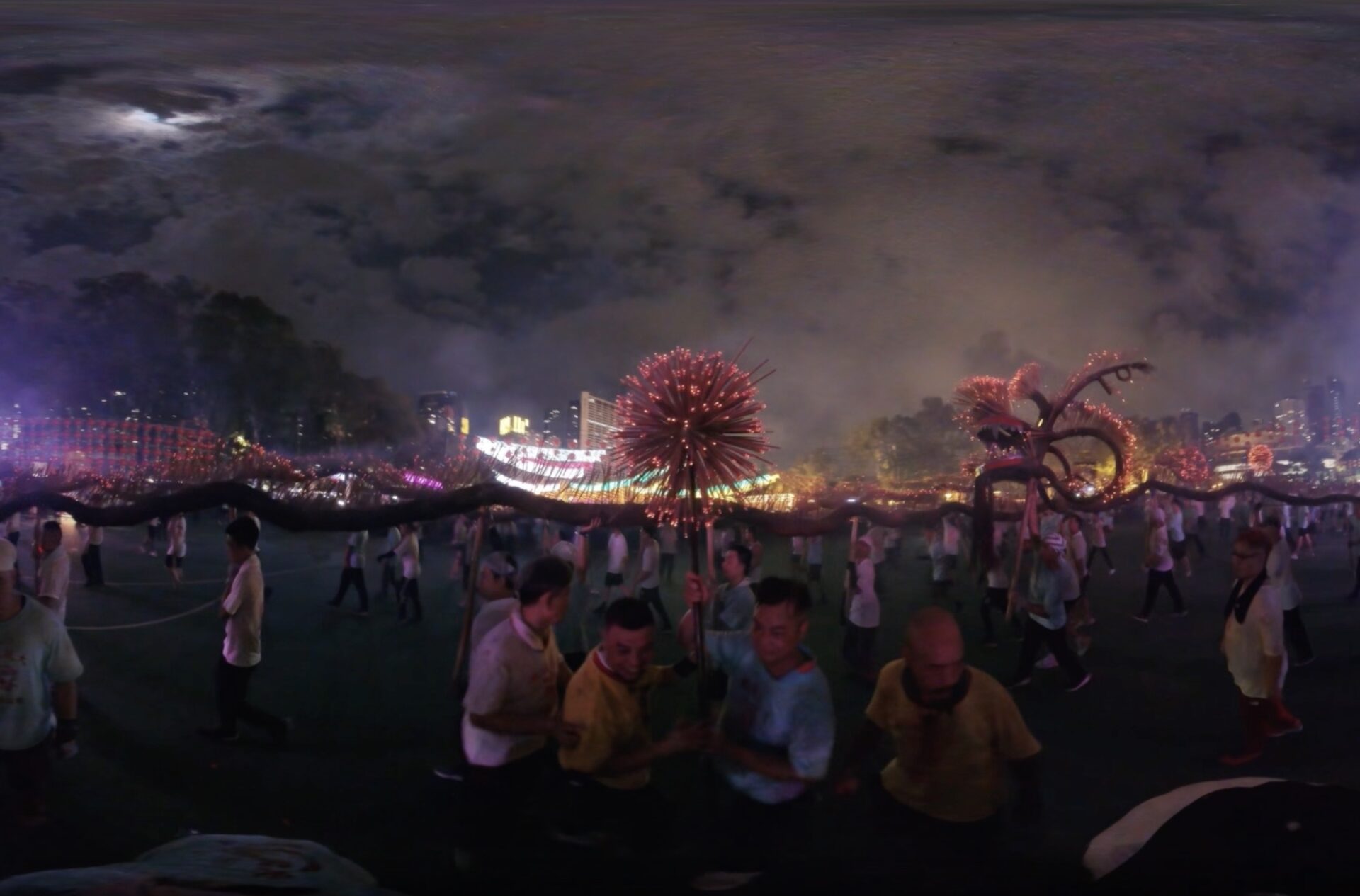
According to legend, in the autumn of 1880, a plague broke out in Tai Hang after the villagers killed a python who was doing evil in the village. An elder claimed that a deity had revealed to him in a dream a way to end the plague. He accordingly instructed the villagers to parade with a fire dragon around the village and let off firecrackers for three consecutive nights during the Mid-Autumn Festival to purge the village of the plague. Since then, the annual fire dragon dance for health and peace has become a tradition in Tai Hang.
Before the government regulated the use of firecrackers by legislation in 1967, it was customary to set off firecrackers during the fire dragon parade. The shop owners in Tai Hang would hang a bunch of firecrackers outside their stores, from the ceiling to the floor, and set them off when the parade went by. As the scenario became very smoky, some would use fans to dispel the smoke, creating a lively scene. In the 1950s, Cai Qing (plucking the greens) was also performed in the Fire Dragon Festival. The dragon plucked green lettuce, which was believed to bring good fortune, as the pronunciation of saang1 coi3 (literal translation: lettuce) is similar to saang1 coi4 (literal translation: good fortune) in Cantonese.