Central – Pedder Street ca.1930
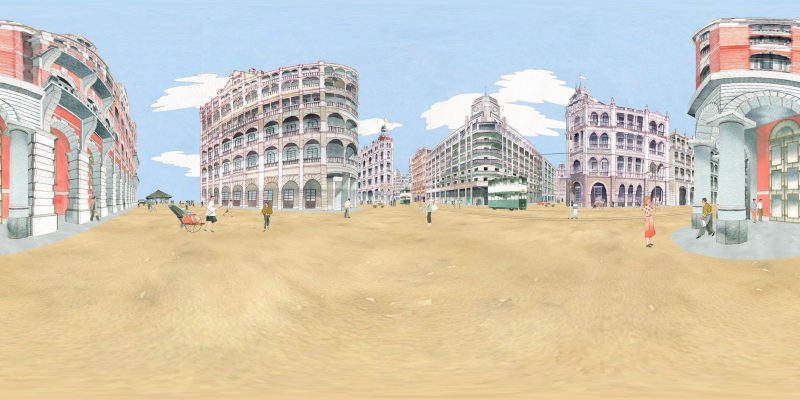
360-degree panoramic artwork created by Flyingpig
Historical Hotspots:
Alexandra Building
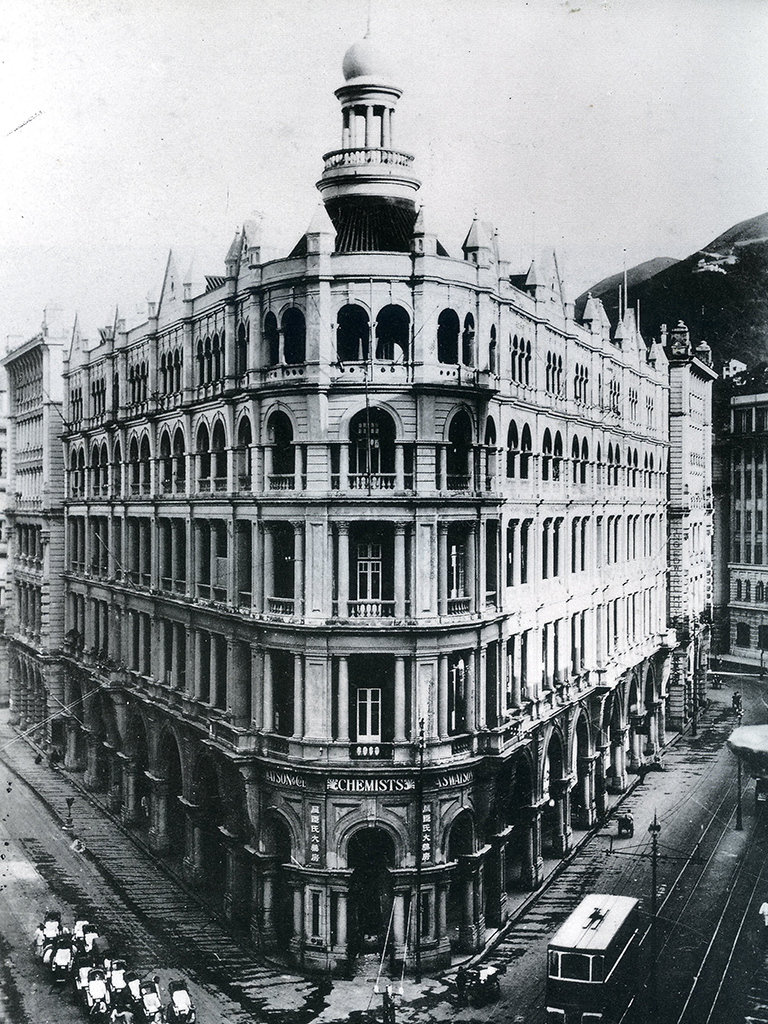
In 1901, Hongkong Land signed a 999-year lease with the government for a reclaimed land, and in 1904, the Alexandra Building was completed on the land. The 5-storey building was initially called Alexandra Buildings due to its row house-like design, with offices divided by walls and individual accesses. More than a decade later, the letter “s” was removed from the name of the building and it was simplified as Alexandra Building. In 1952, Alexandra Building was demolished, and in 1956, Hongkong Land merged the land with the adjacent lot to form the new 20-storey Alexandra House. In 1976, the building was reconstructed again and became the second-generation Alexandra House with 37 storeys today.
The Alexandra Building was mainly used for commercial and retail businesses. The well-known organisations like the Hong Kong Stock Exchange, Watsons and YMCA were its main tenants. Following the growth of the economy, many old tenants have now become internationally renowned brands. For example, the Hong Kong Stock Exchange is now one of the world’s largest IPO markets, and Watsons has become a sizeable health and beauty product retailer in the Asian market.
Photo courtesy of Mr. Hui Yat Tung, David
Gloucester Building
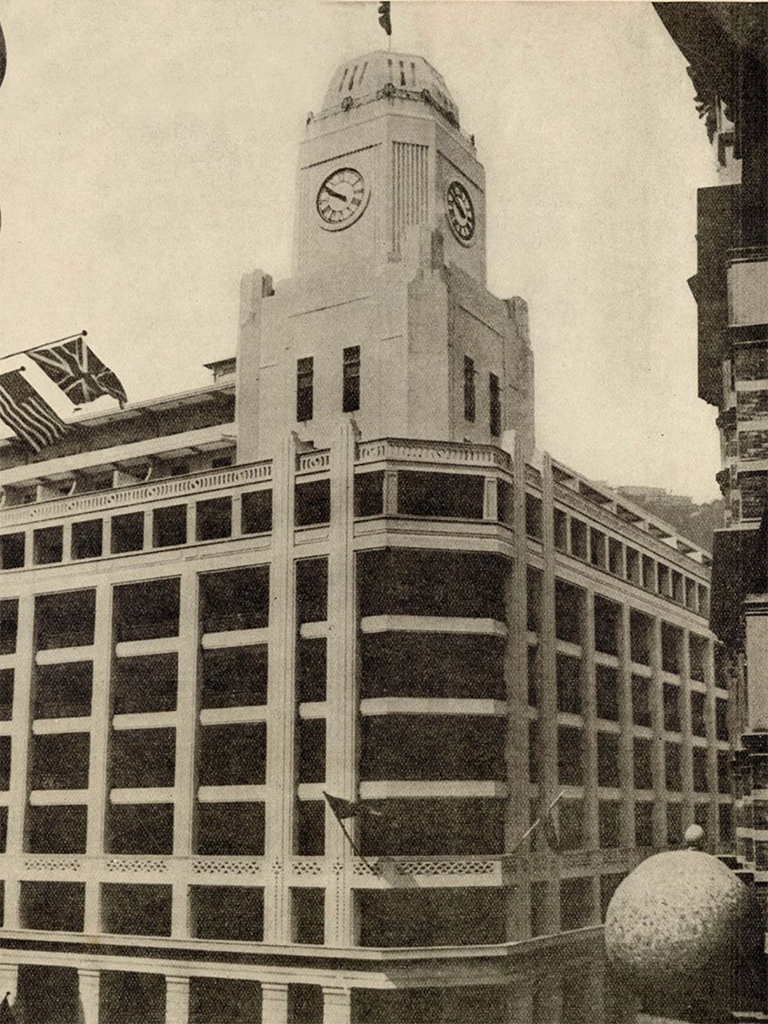
This location was formerly the Hongkong Hotel, which was destroyed by fire in 1926. In 1931, Hongkong Land built the 9-storey Gloucester Building and it was one of the first steel-framed buildings with an Art Deco style clock tower. It was a comprehensive development project comprised of shopping malls, office buildings, the Gloucester Hotel, restaurants and lounges. In 1963, The Mandarin, another hotel owned by Hongkong Land opened, which caused the Gloucester Hotel to be converted into an office building. Later, it was incorporated into the Landmark along with other neighbouring buildings and was rebuilt into Gloucester Tower in 1980.
In December 1941, Hong Kong was occupied by Japanese forces. The police headquarters, located at Central Police Station, was hit by enemy fire, leading to many casualties and damages. All personnel were evacuated to the Gloucester Hotel, and the police headquarters were relocated to the building’s basement. During the Japanese Occupation, the Gloucester Hotel was renamed the Matsubara Hotel. Many celebrities frequented this famous location. The writer Xiao Hong and the Beijing Opera master Mei Lan Fang had dined at the hotel’s restaurant. After the war, the Foreign Correspondents’ Club moved from Shanghai to Hong Kong and organised their gatherings in the lounges and coffee shops located in the Gloucester Building.
Photo courtesy of Special Collections, The University of Hong Kong Libraries
Blake Pier
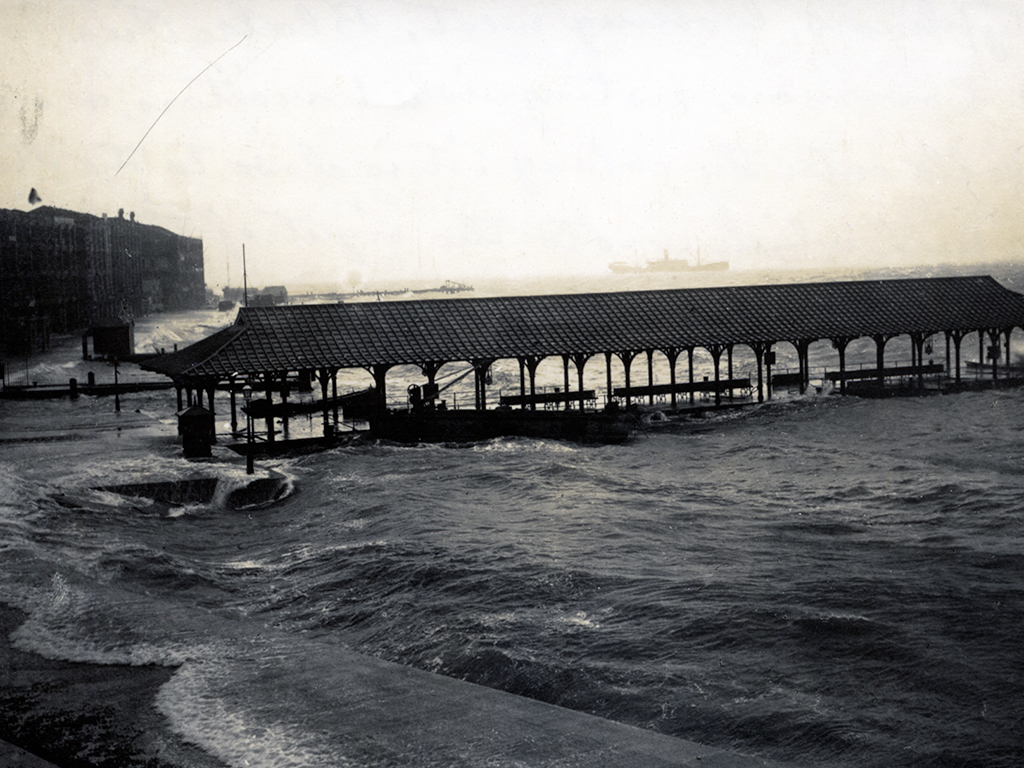
In 1900, the opening ceremony of Blake Pier was hosted by the Hong Kong Governor Sir Henry Arthur Blake. It was originally named Pedder’s Wharf and officially changed to the Blake Pier as it launched. At first, the pier was not covered until the members of the Legislative Council requested to add a temporary mat-shed shelter in 1903. However, it was later destroyed by a typhoon and hence, a steel canopy was built in its place in 1909. In 1925, the pier was replaced by the newly completed Queen’s Pier, it was demolished 40 years later and the steel roof was relocated to Morse Park. It was not until 2006 that Blake Pier was rebuilt in Stanley, and the steel canopy was restored to cover the pier. If you would like to explore the reconstructed pier, you may head for a trip to Stanley.
It was challenging to build Blake Pier as the weight of the big clock tower was a major concern in the design project. The newest steel structure brackets and piles were needed to support the tower, yet the relevant techniques, equipment and expertise were limited in Hong Kong at that time. So the entire construction process, from design, manufacturing to installation of the steel structures was introduced by the United Kingdom. This was the pier where the Hong Kong government planned receptions for the VIPs who visited the city. Former Governors, Sir Matthew Nathan and Sir Frederick Lugard etc. as well as the famous Chinese revolutionary Dr. Sun Yat-sen disembarked through the pier.
Photo courtesy of Special Collections, The University of Hong Kong Libraries
The Third General Post Office Building
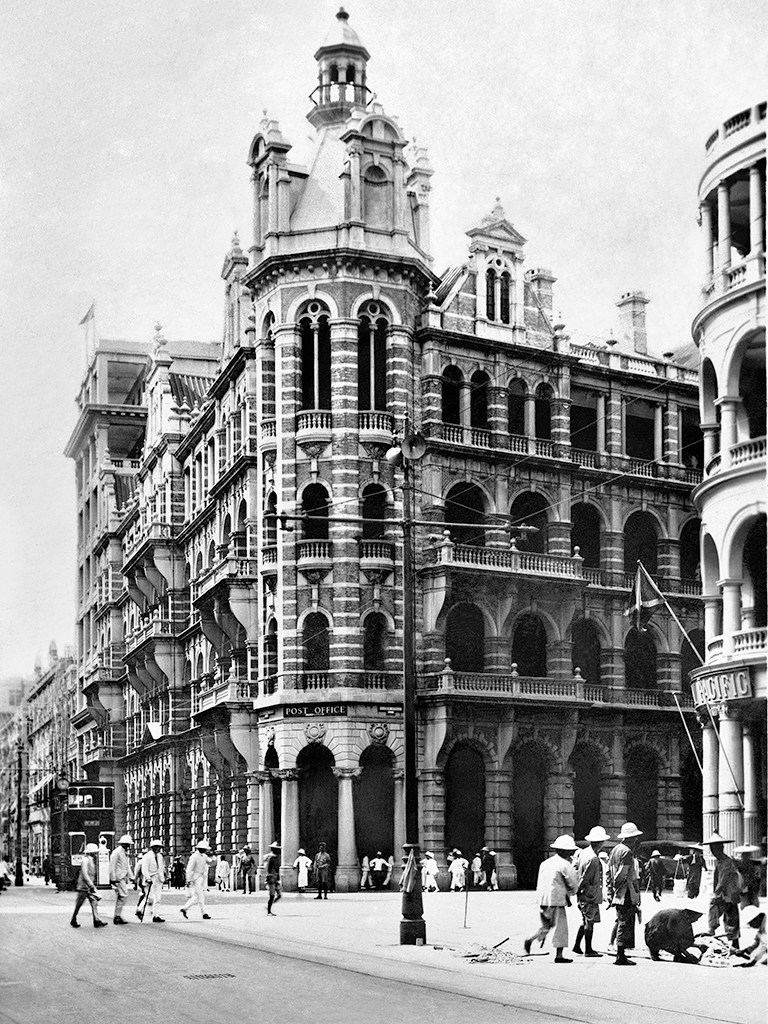
The current location of World Wide House was the third General Post Office building, which began its operations in 1911. It was a 4-storey building with walls made of red bricks and granite, reflecting a Victorian Gothic style of construction. Its symmetry, corner tower and gable roof represented the English Renaissance’s majestic influence. In addition to providing postal services, it was also a workplace for other government departments. Following World War II, public demands for postal services gradually increased. Concurrently, there was also a need to accommodate the construction of the Mass Transit Railway. The General Post Office was relocated to Connaught Place in 1976, after the building’s demolition.
Hongkong Post first tested its airmail service in 1932. Mail was sent by air to Marseille, France, and then by surface mail to its destination of London, England. In 1936, the Imperial Airways launched its regular airmail service and helped expand Hong Kong’s postal service to include service by air. From 1950, Hongkong Post created service counters particularly for female customers, who were mainly foreigners.
Photo courtesy of FormAsia Books Limited
Jardine Matheson House
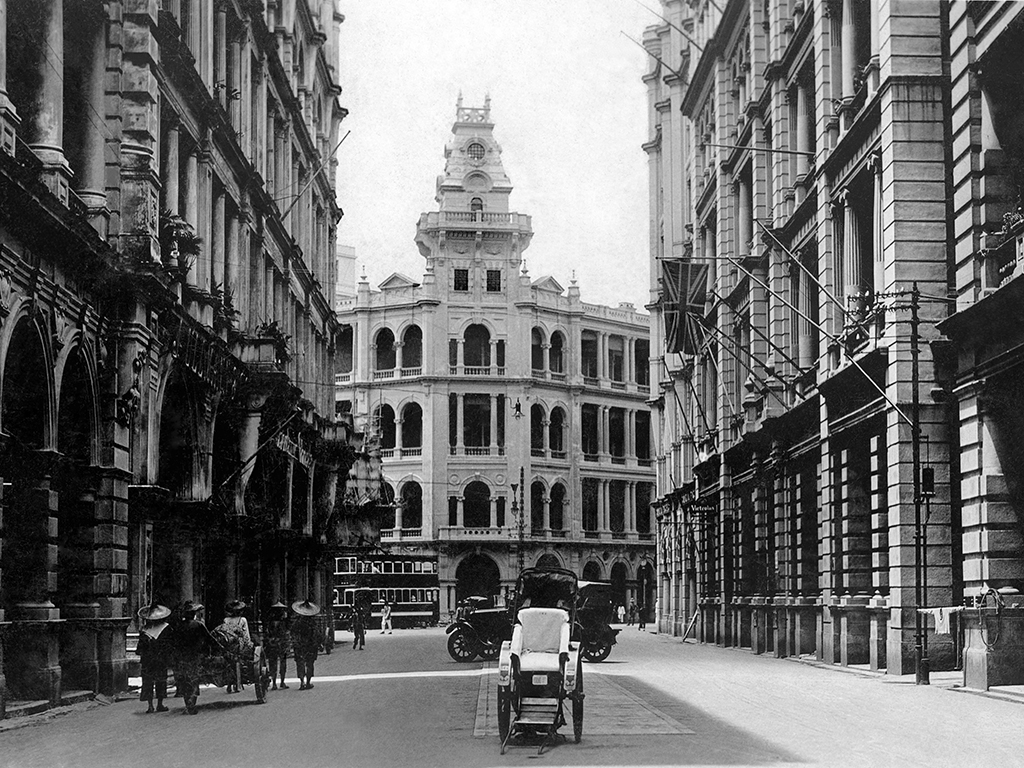
Jardine Matheson, formerly known as Jardines, is a multinational British conglomerate with a wide range of businesses, including real estate, hotels, and retail stores. In 1905, Jardine Matheson built the group’s headquarters here. In 1955, the Hongkong Land acquired the building and rebuilt it into the 17-storey new Jardine Matheson Building in 1958. In 1977, the Hongkong Land under Jardines exchanged the building with the Lane Crawford House by the Wheelock & Company so that it could congregate its land to form the Landmark. In 1984, the building was rebuilt as Wheelock House.
Jardines owns itself a salute and garrison, with a history dating back to 1841. In the past, whenever there were arrivals or departures of tai-pans (senior business executives), Jardines would welcome or bid farewell with a gun salute. Legend has it that Jardines once made a mistake violating the rules, whereby the practice should only salute the military and thus offended a senior naval officer. As a result, Jardines was ordered, as a minor penalty, to fire a gun every day at noon, which constituted the origin of “The Jardine Noonday Gun”. In addition, the gun is also fired by a Jardines official at midnight every New Year’s Day, with a cultural meaning of ring out the Old Year and ringing in the New. It is a local tradition to celebrate the new year.
Photo courtesy of FormAsia Books Limited
Union Building
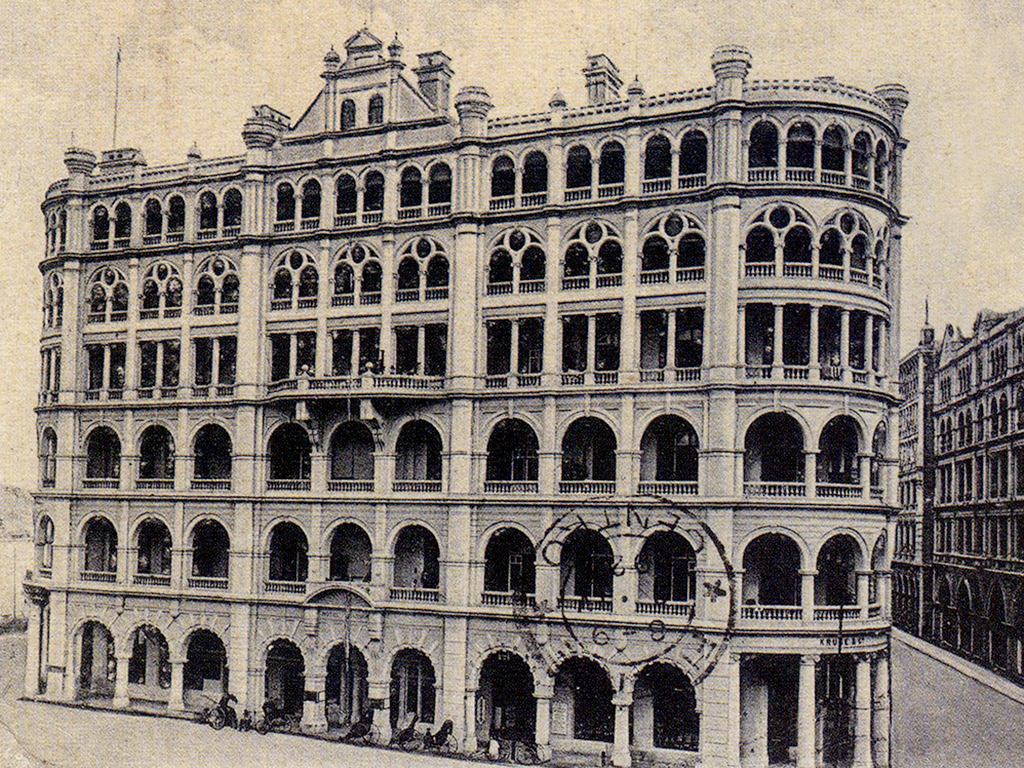
Chater House was previously the headquarters of the Union Insurance Society of Canton. There were many changes over time from the Hotel Mansions constructed by the Hongkong Hotel in 1905, to being acquired by the Union in 1921 and renamed as the Union Building and then bought again by the Hongkong Land in 1946. In 1961, Hongkong Land merged three buildings, Union Building, King’s Building and York Building, and rebuilt them into Swire House. In 2002, it was reconstructed into today’s Chater House.
It was common for insurance companies in Hong Kong to name themselves using the transliteration of the English word “insurance” in the past. The Union was one of them. The company was founded in Guangzhou by a British merchant firm, Dent & Co. and then became a spin-off. The company later moved from Macao to Hong Kong in 1841, coinciding with the early development of the city. It became one of the earliest foreign insurance companies to register and set up headquarters in Hong Kong. At that time, the insurance industry was focusing on maritime accident and fire insurance. The Union pioneered itself by developing its major business and establishing branches in Shanghai and Australia etc. where it developed into an industry leader.
Photo courtesy of Mr. Hui Yat Tung, David
Animation:
