Jordan – Jordan Road ca. 1960

360-degree panoramic artwork created by Wai Wai
Historical Hotspots:
The Liberty Theatre
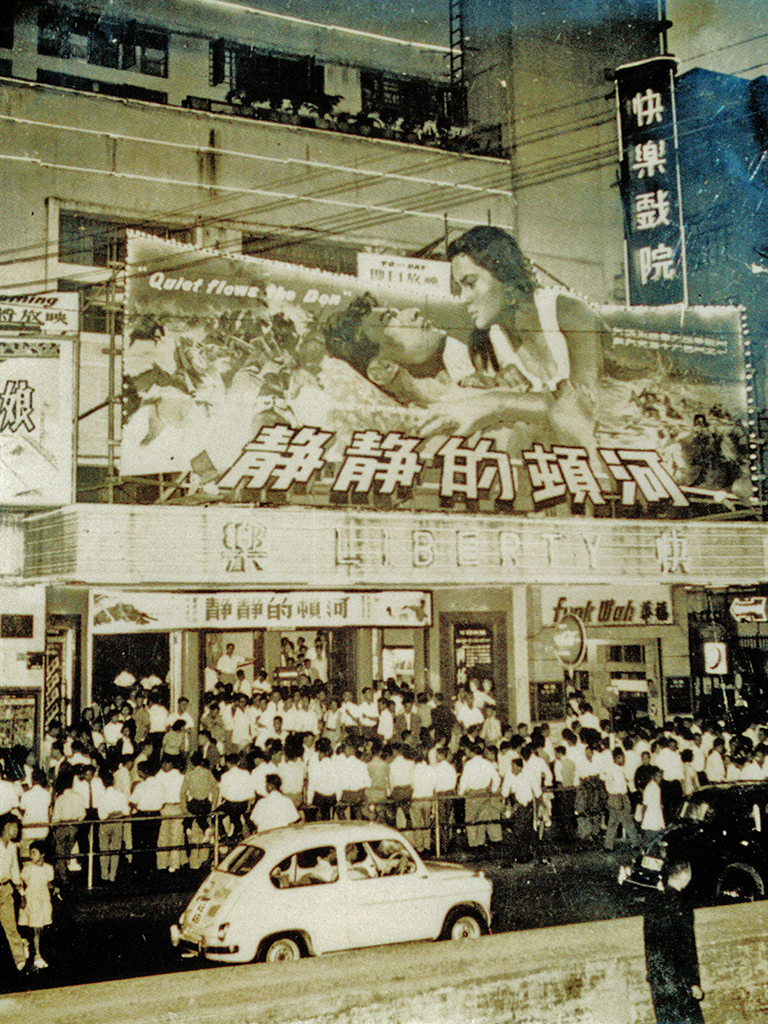
The Liberty Theatre opened on a special occasion – the Chinese New Year’s Eve of 1949. Sir Alexander Grantham, the then governor of Hong Kong, was invited to be the host to cut the ribbon for the opening ceremony. At that time, the theatre was considered a novel cubist architecture designed by renowned architects, Mr. Chau Iu Nin and Mr. Richard Lee. The theatre encompassed 8,350 square feet and had a seating capacity of 1,200 people. It was one of the film theatres with the largest capacity in Kowloon when it was completed.
The Liberty Theatre began its operations on the first day of the Chinese New Year in 1949. The first film was The Laughing Lady, a foreign-coloured musical film in tune with the festive atmosphere. The theatre had also selected multiple types of films such as a European film From France With Love, a Hong Kong film Supremo, a Russian film And Quiet Flows the Don and so forth.
Photo courtesy of Mr. Cheng Po Hung
Jordan Road
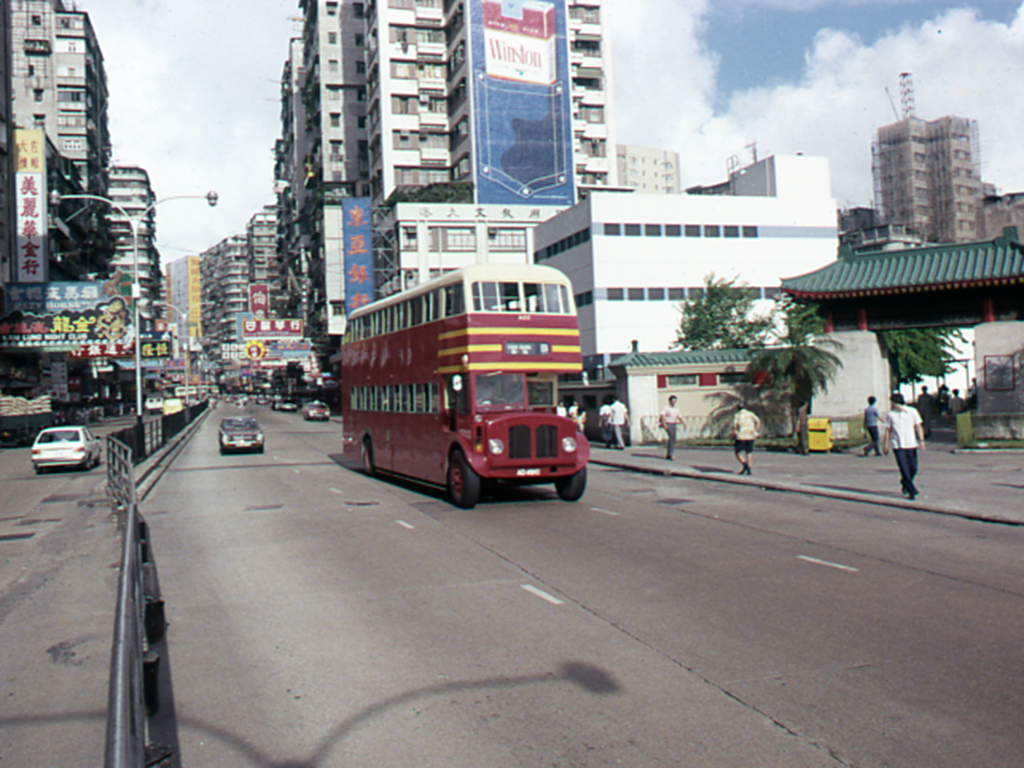
Running parallel from Kansu Street to Jordan Road, there are a total of 6 streets constructed from land reclamation in the 1900s. Kansu Street was named as “First Street” at the onset, while the remaining streets were also named according to their sequence of the numbers respectively. Jordan Road in Kowloon was then named “Sixth Street”, which was also the name of another street on Hong Kong Island. To avoid confusion caused by similar street names on Hong Kong Island and Kowloon, the government renamed the streets in 1909. The Sixth Street in Kowloon was then merged into the southern section of Gascoigne Road and became Jordan Road.
Jordan Road appeared to be desolate when it was first constructed. Apart from the Diocesan Girls’ School founded in 1913, only a small portion of residential buildings were erected in the area. During the 1930s, Jordan Road Ferry Pier replaced Yaumatei Ferry Pier to provide ferry services routing from Yau Ma Tei to Wan Chai and Central. In the 1950s, a bus station was set up next to the pier, gradually turning this location into a transportation hub in Kowloon. Jordan Road since then has become a district with heavy pedestrian flow, with a myriad of stores on the streets.
Photo courtesy of Special Collections, The University of Hong Kong Libraries
Temple Street
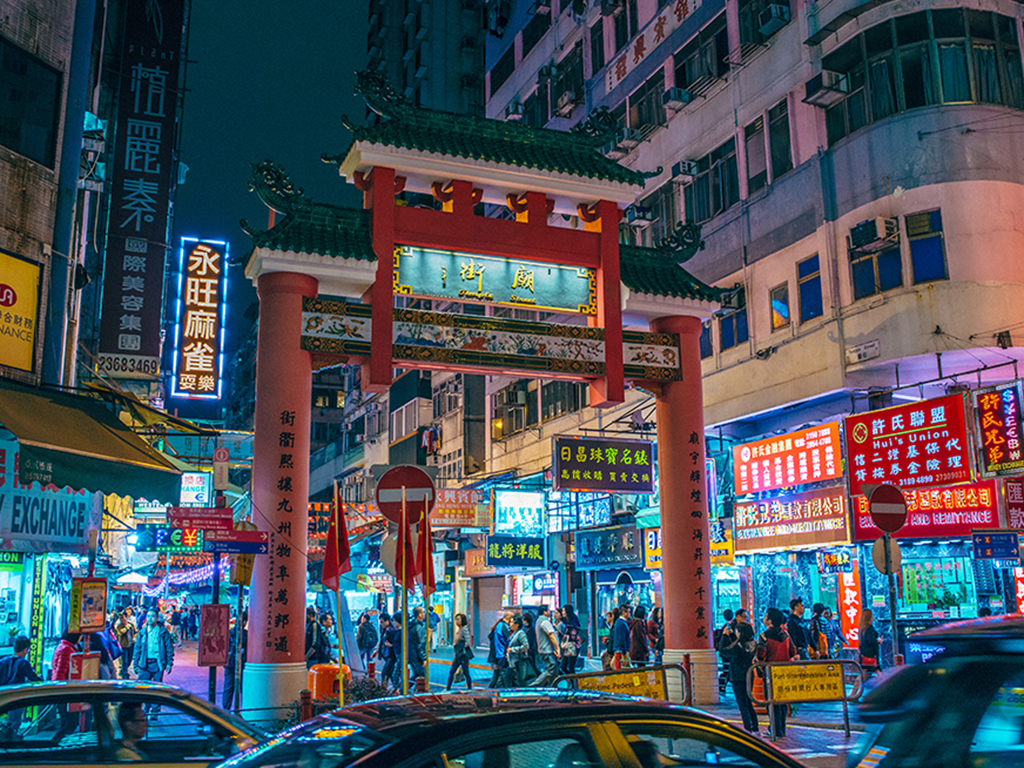
The name of Temple Street is derived from the Tin Hau Temple situated on Public Square Street. Temple Street was cleaved into two parts by the Tin Hau Temple as “Temple Street North” and “Temple Street South”. Since the time before World War II, street artists and street hawkers had been gathering on Temple Street. When night fell every day back then, it became a lively and thrilling market. Not only were there stores for men’s accessories, mahjong houses, fortune-teller stalls, but also there was a variety of performers like storytellers, street singers, and so forth, making Temple Street known as the “Commoners’ Nightclub”, reminiscent of the old vintage Hong Kong.
During the 1950s and the 1960s, the section from Nanking Street to Jordan Road was also designated as part of the night market on Temple Street. Dating back to 1970, to reduce traffic congestion around Jordan Road Ferry Pier, the government established public minibus stations on Woosung Street and Temple Street (Jordan Road Section) respectively. All hawkers in this area were relocated to another section of Temple Street. We can hardly find any hawkers within the area today.
Photo courtesy of Hong Kong Tourism Board
Movie Hotspot:
CITY IN TIME incorporates cinematic elements at designated locations. Check out these filming locations of Hong Kong movies, where you can revisit classic Hong Kong movie clips on-site or stills on the website:
Anita
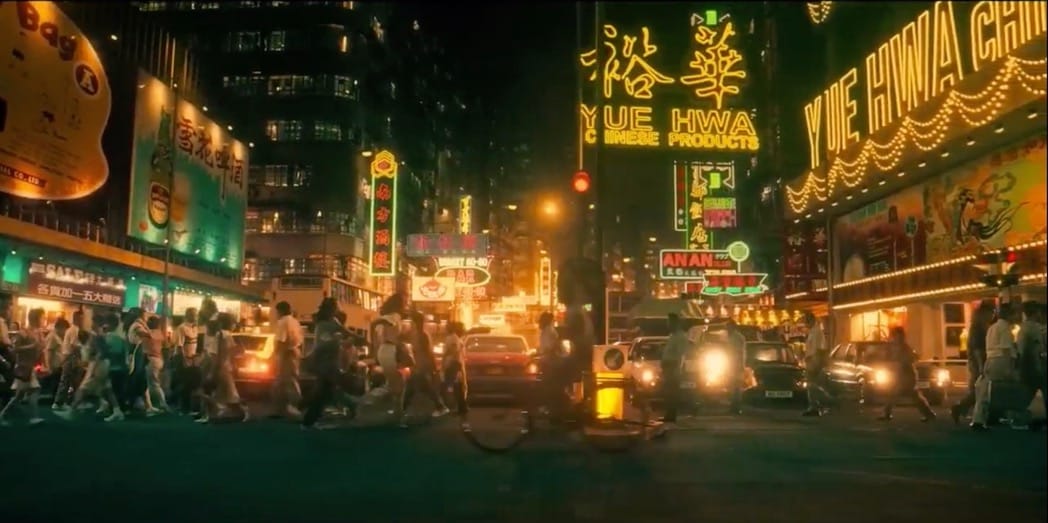
The ‘Ever-Changing Diva’, Anita Mui, a household name in Hong Kong, was the very definition of a cultural icon during Hong Kong’s golden age in the eighties and nineties. Anita, starring Louise Wong, opens with her final concert and looks back on her life and legacy.
Upon its release in 2021, Anita scored the biggest opening day gross for a local film that year. It also had the highest admissions for a local film that year. It also won numerous awards in Hong Kong and Asia, including Best New Performer (Louise Wong) and Best Supporting Actress (Fish Liew) at the 40th Hong Kong Film Awards in 2022.
C’est la vie, mon cheri (Endless Love)
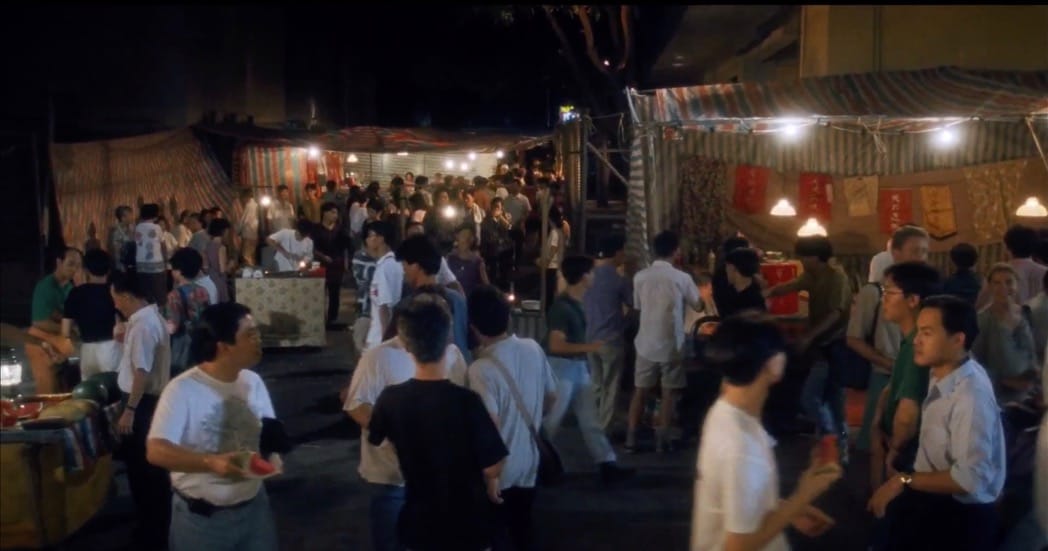
C’est la vie, mon cheri, also known as Endless Love, is a 1993 Hong Kong romance film directed by Derek Yee and starring Lau Ching-wan and Anita Yuen. Following its release, it won six awards at the 13th Hong Kong Film Awards, including Best Film and Best Director.
The film portrays Amin (Anita Yuen), a bone cancer patient, whose optimistic personality helps a dejected musician Cheung (Lau Ching Wan) regain himself.
The footage features a Cantonese opera troupe to which Amin (Anita Yuen) belongs performing on Temple Street. Cheung’s (Lau Ching Wan) gaze is drawn toward the performance, where he first encounters Amin (Anita Yuen).
Courtesy of Film Unlimited Production Co., Limited
Animation:

In the 1960s, the night market covered the section of Temple Street from Nanking Street to Jordan Road. Numerous hawkers gathered at dusk, setting up their stalls and stocking a myriad of goods such as street food, fruits, second-hand clothes, books, and so forth. In this picture, you can see street-food hawkers selling various goods.