Tsim Sha Tsui – Clock Tower ca. 1937
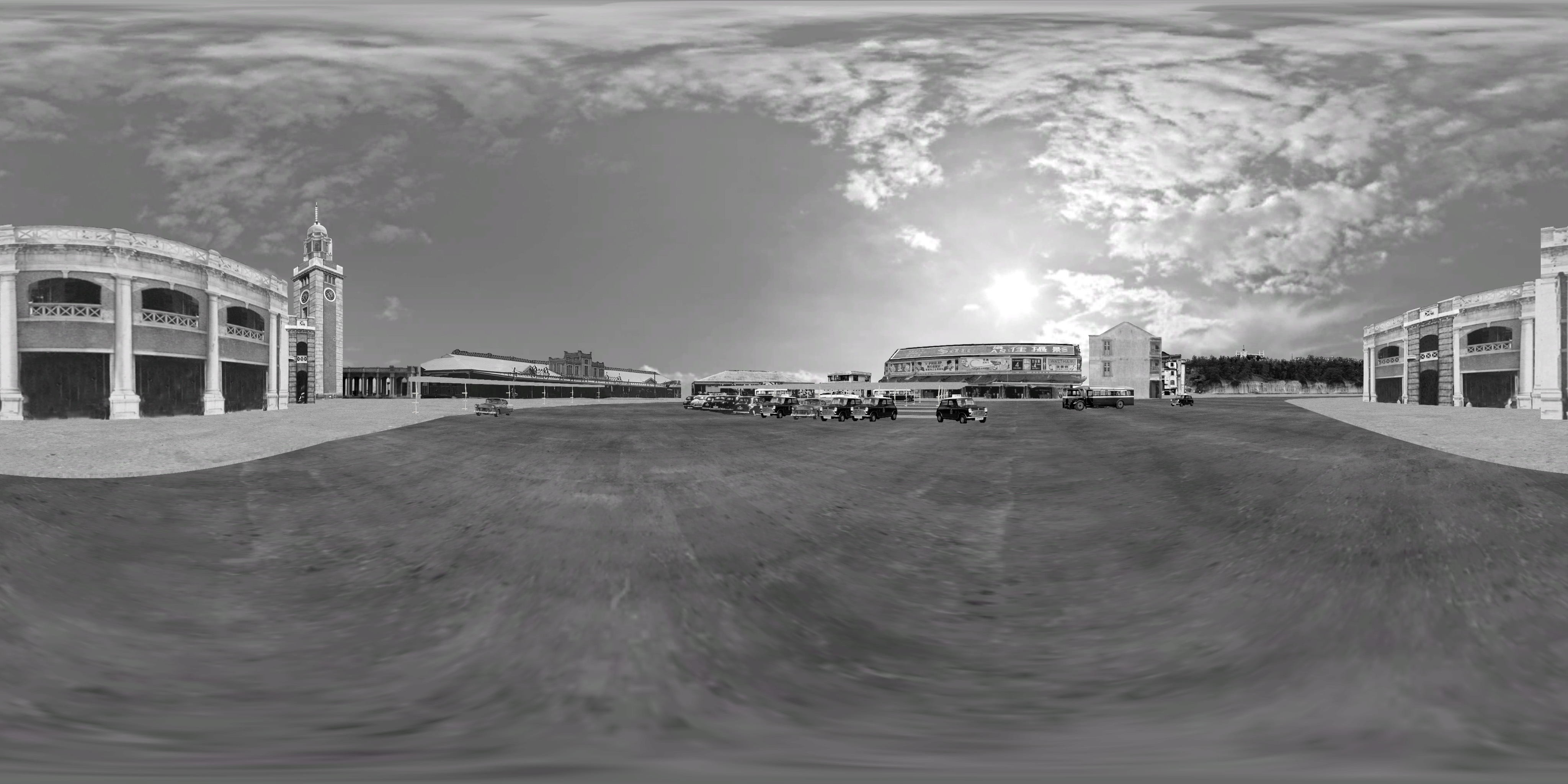
360-degree panoramic artwork developed from historical photos
Historical Hotspots:
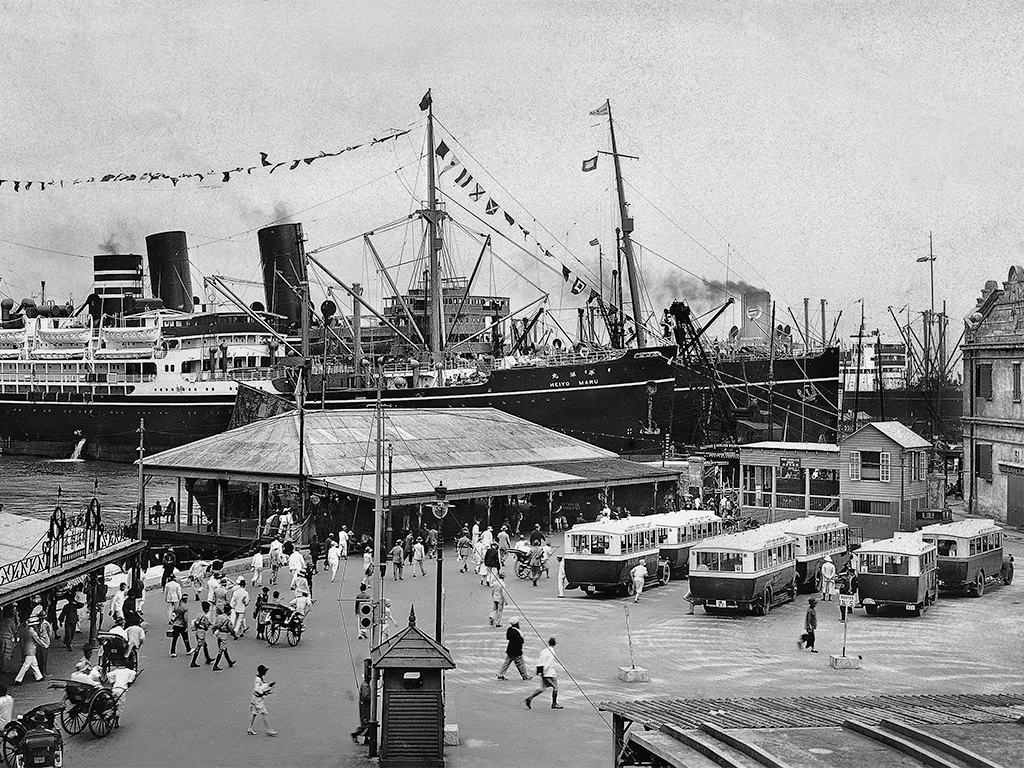
Tsim Sha Tsui Bus Terminus
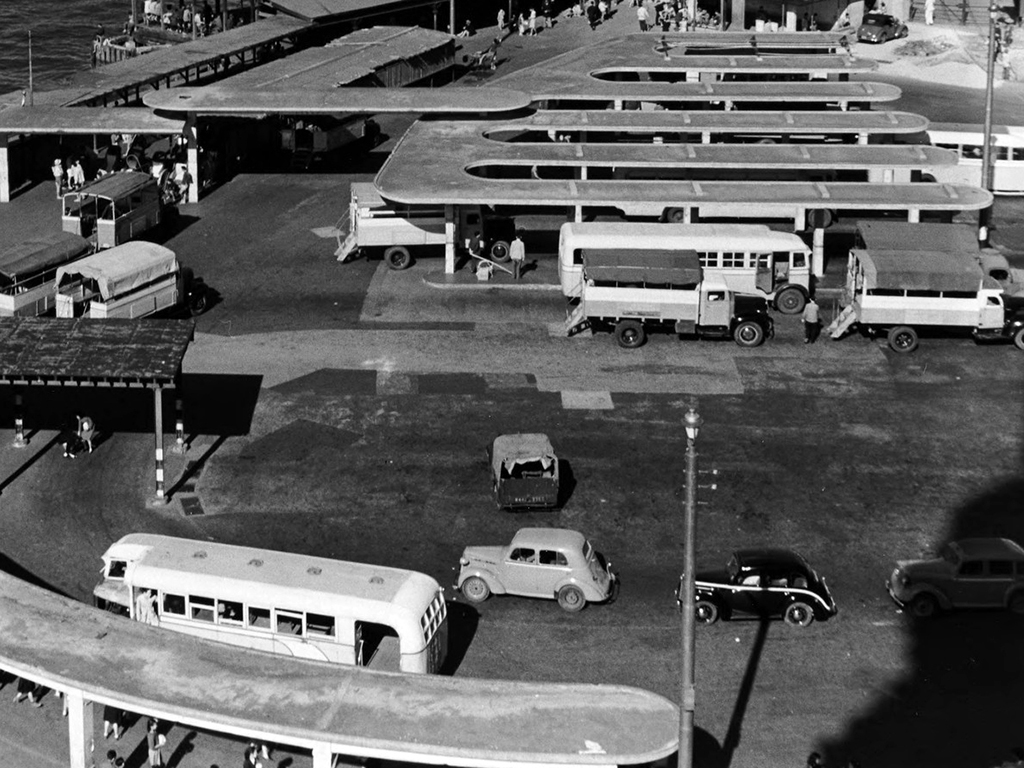
Tsim Sha Tsui Bus Terminus was the first bus terminal on the Kowloon Peninsula, in service since the first bus route in Kowloon started operating in 1921. Kowloon Railway Station, Star Ferry Pier, Kowloon Wharves, the public pier and the vehicle transit area were located nearby at that time. For more than a century, the function and location of the oldest bus terminal remain unchanged in Hong Kong.
In the 1930s, the public transport network connecting the bus terminus and the Star Ferry Pier was comprehensive. In 1933, the Hong Kong Government granted franchises to two bus companies. Following the development of the business, the total number of buses of The Kowloon Motor Bus Company Limited increased from 110 to 136 in 1939, and a waiting room was built at the bus terminus in 1935 to shelter passengers from the sun and rain. In the 1950s, since the terminus was overcrowded and in order to prevent accidents, railings were installed on the platform. In 1957, due to the development of projects such as the new Star Ferry Pier, the bus station was rebuilt.
Photo courtesy of Harvard-Yenching Library, Harvard University
The Second Star Ferry Pier Kowloon
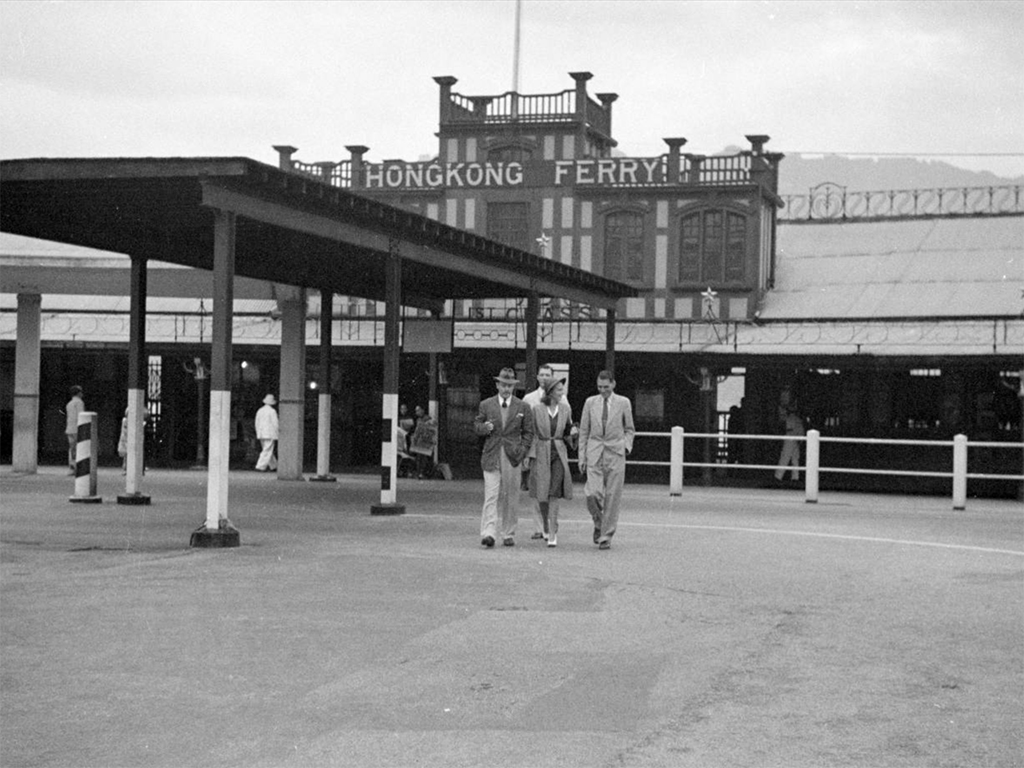
Since 1888, the Star Ferry provided ferry services between Hong Kong Island and Kowloon. The Tsim Sha Tsui Ferry Pier constructed by the Kowloon Wharves was opened in April 1906. However, in September of the same year, a typhoon destroyed the pier, ships and other facilities, so the company could only set up a temporary pier. The service was not fully restored until the completion of the second Tsim Sha Tsui Ferry Pier in 1912. With the increase in passenger numbers, the Star Ferry decided to rebuild the piers in Central and Tsim Sha Tsui. The west wing of the Star Ferry Pier Kowloon was opened in 1957. By 1958, the two Star Ferry Piers were fully opened, and the Tsim Sha Tsui Pier has been in use ever since.
Star Ferry Company, Ltd. was established in 1898, formerly known as the Kowloon Ferry Company which was established in 1880. Its ferry is named after the word “star” because the founder of the company believed in Zoroastrianism, stating that stars represent light and purity. Many ferries in the existing fleet have been in service since the 1950s and have been undergoing continual and transporting passengers safely across Victoria Harbour. Taking the Star Ferry to visit Victoria Harbour was once named as one of the “50 Places of a Lifetime” by the magazine National Geographic Travel.
Photo courtesy of the American Geographical Society Library, University of Wisconsin- Milwaukee Libraries
Kowloon Railway Station
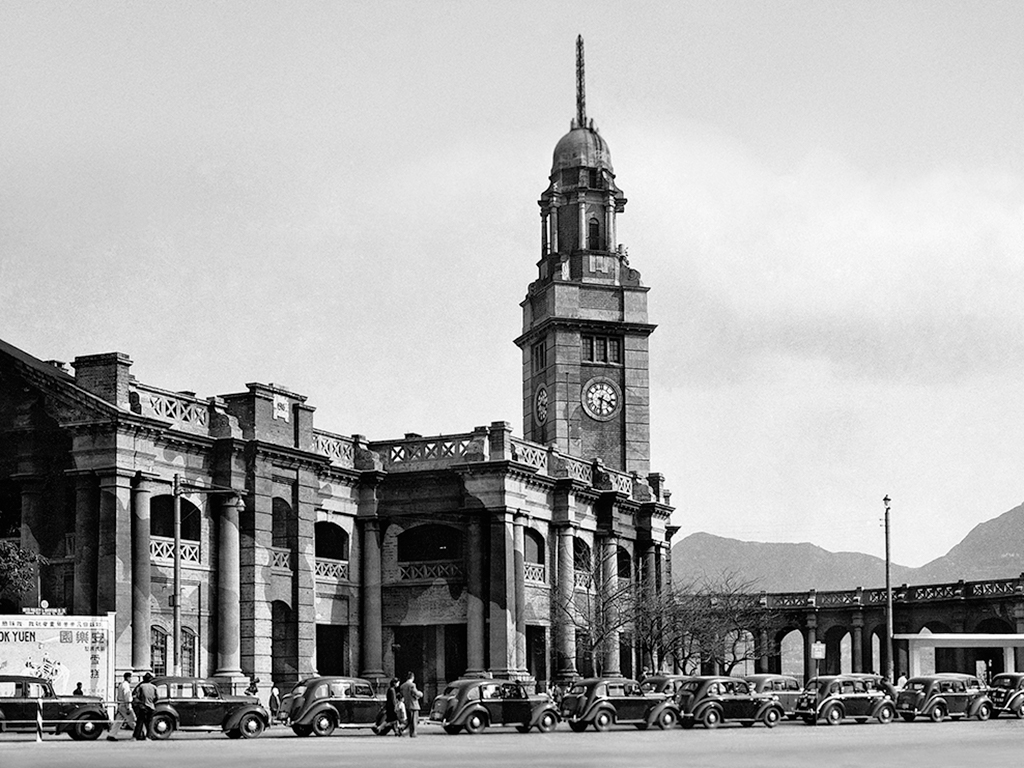
The construction of the Kowloon- Canton Railway (KCR) fell into place at the beginning of the 20th century. The portion inside Hong Kong (the “British Section”: from Tsim Sha Tsui to Lo Wu) was financed, constructed and operated by the Hong Kong government, while the rest in Mainland China (the “Chinese Section”: from Guangzhou to Lo Wu) was funded and constructed by the British & Chinese Corporation on behalf of the Qing government through loans. It was then handed over to the Qing government for operation after completion. The permanent terminus of the British Section was set to be in Tsim Sha Tsui and the construction started in 1911. The platform first operated in 1914, and the station was completed two years later. The building was symmetrical on both sides, using red brick and granite as the main materials. There were ticket offices, waiting rooms, platforms and control rooms underground, and they were all connected to the traffic roundabout and the Star Ferry. In 1921, the clock tower began to operate. In 1975, the Kowloon Railway Station was closed because of the opening of the Hung Hom terminus. It was demolished three years later. Only the clock tower was retained.
In 1955, the first two diesel-electric locomotives arrived in Hong Kong and inaugurated a new page in the history of the Hong Kong railway. The two diesel locomotives No. 51 and No. 52 were named Sir Alexander and Lady Maurine respectively. It was also the first time in Hong Kong that locomotives were named after a person. Now, diesel locomotive No. 51 is on public display at the Hong Kong Railway Museum in Tai Po.
Photo courtesy of FormAsia Books Limited
Kowloon Public Pier
Before the demolition of the Kowloon Railway Station, the Kowloon Public Pier was also known as the Kowloon Tsim Sha Tsui Railway Pier. It was a landing spot for small boats to load and unload passengers and also an important waterway transportation centre in Tsim Sha Tsui. Shipping companies in Hong Kong offered water taxi services commonly known as “Walla-Walla” from 1905, shuttling people between Tsim Sha Tsui and Central across the Victoria Harbour.
“Walla-Walla” was the common name for water taxis and was named as such due to the sound that the boat’s engine made, hence people called the water taxis “Walla-Walla”. The water taxis were quite slow and had no fixed routes. Before the opening of the Cross Harbour Tunnel in Hung Hom in 1972, when Star Ferry services closed at midnight, “Walla-Walla” became the only transportation between Central and Tsim Sha Tsui. It delivered newspapers from the 1950s to the 1960s, when all newspaper publishers were located on Hong Kong Island. The newspapers were delivered to the New Territories and Kowloon via “Walla-Walla” every morning.
Photo courtesy of FormAsia Books Limited
Movie Hotspot:
CITY IN TIME incorporates cinematic elements at designated locations. Check out these filming locations of Hong Kong movies, where you can revisit classic Hong Kong movie clips on-site or stills on the website:
Cold War

Cold War, starring Aaron Kwok and Tony Leung, was released in 2012. At the 32nd Hong Kong Film Awards, the film received 12 nominations and won 9 awards including Best Film, Best Director (Longman Leung, Sunny Luk) and Best Actor (Tony Leung).
The Film opens with the puzzling vanishing of an Emergency Unit Car with five police officers, which triggers an urgent rescue mission called “Cold War”, led by two deputy police commissioners, Sean Lau (Aaron Kwok) and M.B. Lee (Tony Leung).
The footage shows Sean Lau arriving at Tsim Sha Tsui Ferry Pier with the ransom.
Courtesy of Edko Films Limited
With the support of Cultural and Creative Industries Development Agency
Animation:

In the 1930s, the buses that operated in Kowloon were all the single-deck type. Passengers needed to pull the rope hung on the ceiling of the vehicle when they intended to disembark. The bell, where the rope was connected, would be rung as a notification for the drivers to stop the bus at the next station.